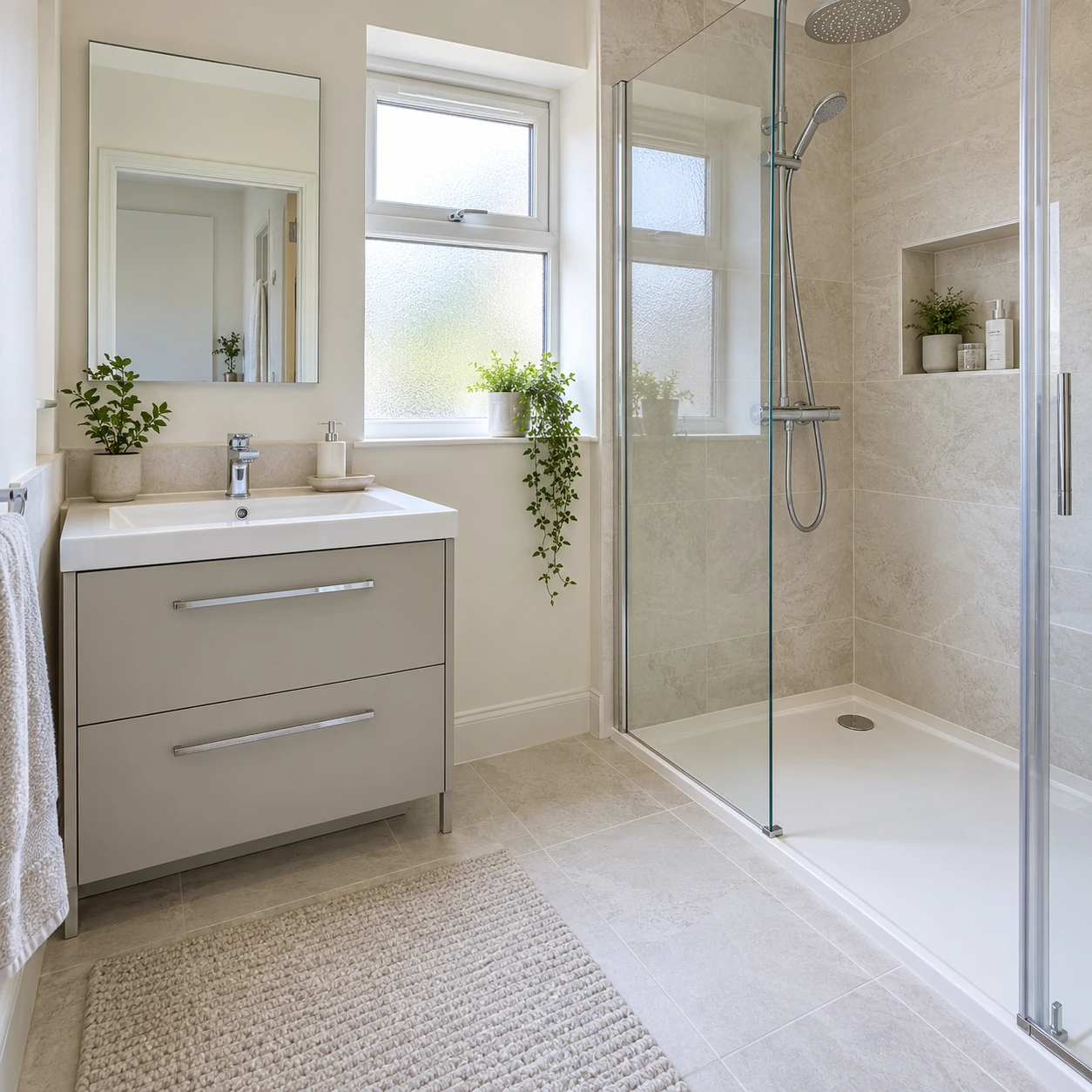
Compare bathroom suites by the actual products, how they work and how they can be repaired. A familiar brand may offer a particular design or useful spare-parts support, but the name alone does not prove that every item is better. An own-brand suite also needs checking beyond its attractive headline price.
Start with the size and everyday use
A bathroom suite has to fit your room before anything else. Check the toilet projection, basin depth, bath size and the space needed to open doors and drawers. A suite shown together in a large display may be awkward in a small bathroom. The finished clearances matter more than whether every item comes from one range.
Think about the people who use the room. Tap handles should be comfortable to turn, a basin should leave useful handwashing space and the toilet should suit its users. If you can, look at a sample or display. Photographs rarely show whether a tap feels stiff or whether a vanity drawer gives you the storage you expected.
Compare the exact items in each quote
The word “suite” can cover different combinations. One offer may include a bath and taps; another may cover only the basin and toilet. Ask for product names or codes, sizes and finishes. Check whether the seat, waste fittings, panels and furniture are included. These details make it possible to compare two quotes fairly.
Look at the installed price as well as the supply price. Delivery, removal, wall repairs and fitting may sit outside a product offer. A low-cost suite can still need substantial preparation in your room. Our bathroom pricing page explains the current packages, while the written quote should identify the work and products selected for your particular bathroom.
Ask about toilet parts and replacement seats
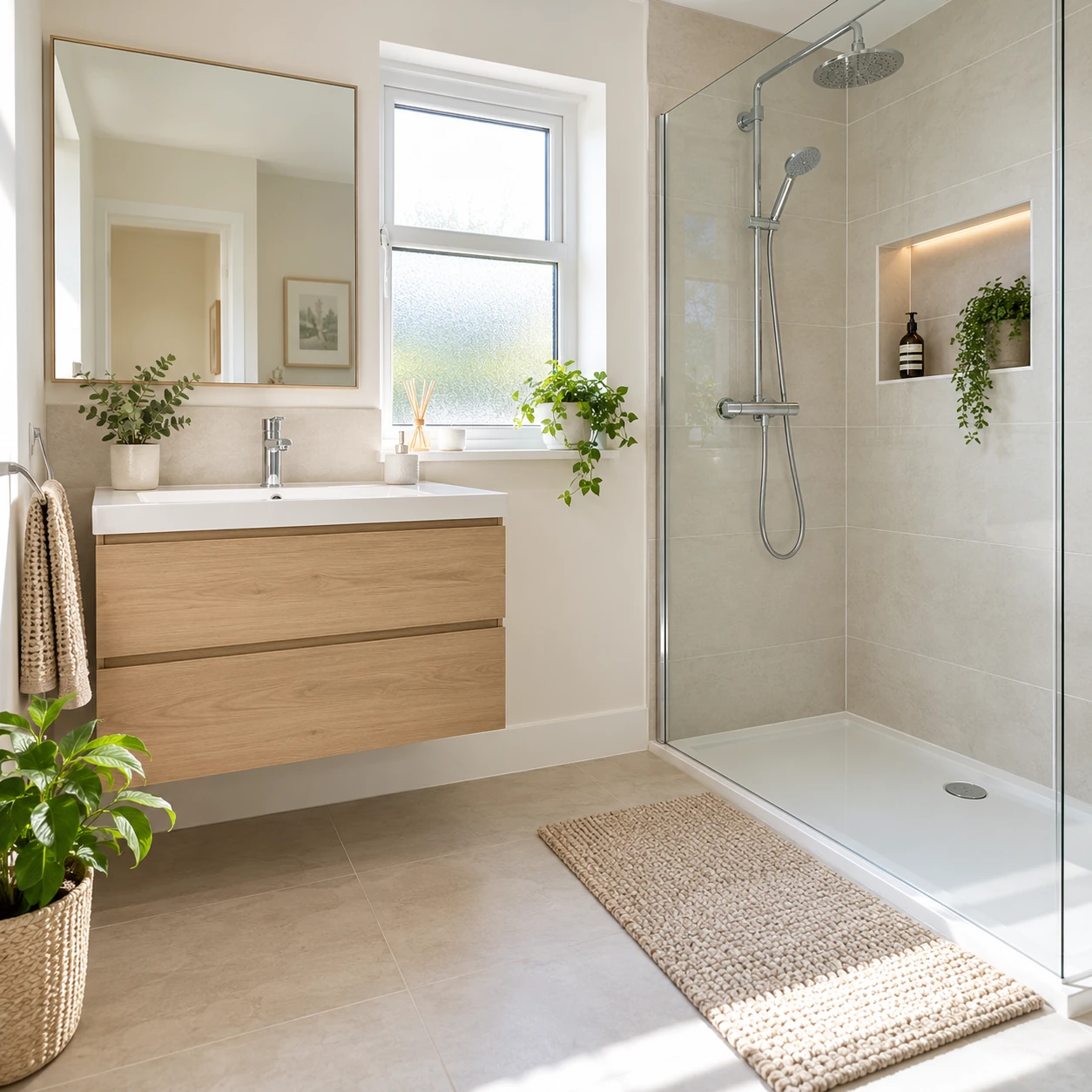
A toilet includes parts that may eventually need attention, such as its fill valve, flush mechanism and seat hinges. Ask how to identify those parts and whether replacements are available for the model being supplied. Do not assume that every large brand stocks every old part indefinitely, or that every own-brand product uses untraceable components.
An unusual seat shape can make a future replacement harder to match. Keep the model details and check the fixing method. For a concealed cistern, ask how its working parts can be reached after installation. A tidy appearance should still allow sensible maintenance. Our toilet types guide explains the main layout choices in more detail.
Check taps, showers and their controls
Taps and showers need to suit the water supply as well as the chosen basin or bath. Ask the fitter to check the product's requirements before ordering. The same decorative range can contain several models with different connections or operating requirements. Choosing from a photograph alone can lead to a product that looks right but does not work as expected.
Ask about replacement cartridges, handles, hoses and other service parts. Keep the instructions and finish name with the invoice. Coated finishes may need particular care, and abrasive cleaning can damage some surfaces. The shower valve guide explains a useful functional difference to discuss before choosing controls, without relying only on their appearance.
Look at furniture and storage details

A vanity's usefulness depends on the storage left after pipes and wastes are fitted. Ask to see the drawer or cupboard arrangement, including any cut-outs. Check whether shelves can hold the bottles you use and whether doors open clear of the toilet or shower screen. A wider cabinet is not always the most practical choice in a narrow room.
Bathroom furniture still needs care around splashes and leaks. Ask what the manufacturer recommends and how exposed edges are protected. A product described as suitable for a bathroom is not necessarily designed to stand in water. Discuss how the unit will be supported and how connections can be reached if a leak or blockage needs attention later.
Mix products where it improves the bathroom
You do not have to choose every fitting from one brand. A different basin, toilet or tap may suit the room better, provided the products work together. Ask the installer to check compatibility and proportions. White ceramics, metal finishes and furniture colours can vary between ranges, so compare samples where matching matters to you.
Keep the arrangement straightforward. Several suppliers can mean separate delivery dates, returns and warranty contacts. Agree who is ordering each item and who deals with problems. If you buy something yourself, ask the fitter to approve the exact model beforehand. This is particularly useful for shower valves, screens, concealed frames and products that need specific fitting accessories.
Keep useful paperwork for after the refit
Before handover, ask for the product list, care instructions and any registration details. Product warranties and the installer's workmanship terms are different, so keep both. Check the conditions and contact route rather than judging the offer only by the longest headline guarantee. A clear record will help if you need a replacement part or advice later.
For help planning a suite in Cumbernauld, call 01236 801802 or use the enquiry form. Tell us which products you like and what bothers you about the current room. We can discuss the fitting work and the choices that matter to you, so the decision is based on the bathroom you need rather than the badge on the box.