
Acrylic and enamelled steel baths can both work well in a fitted bathroom. The choice should be based on the particular bath, the room and how it will be installed, rather than the material name alone. Shape, support, access, cleaning and the fittings supplied with it all matter. Before ordering, compare complete product details and check that the chosen bath can be carried into the bathroom and connected as planned.
Compare the usable shape and dimensions
The outside length does not tell you how much space is inside a bath. The slope of the back, width at the shoulders and position of the waste all affect comfort. Two baths sold at the same overall size can feel quite different. If bathing is important to you, look at the internal dimensions and try a display model where possible.
For a shower-over-bath, check the standing area and the screen designed to fit it. A shaped bath may offer more shower space, but its wider end can narrow the gap beside the basin or toilet. Include the panel, taps and screen opening when measuring. The right bath needs to work as part of the room, not simply fit between two walls.
Understand what acrylic construction includes
Acrylic baths are commonly reinforced and supplied with a particular support arrangement. The reinforcement, base and installation system vary between models. Do not assume that the visible sheet thickness tells the whole story about quality. Read the product details and fitting instructions, including any requirements for wall fixings or support beneath the base.
Acrylic can feel warmer to the touch than an unfilled metal bath, but claims about how long water stays warm depend on the product and conditions. The room temperature, water volume and use all play a part. If heat retention is a priority, ask for product-specific information rather than relying on a general promise about every acrylic bath.
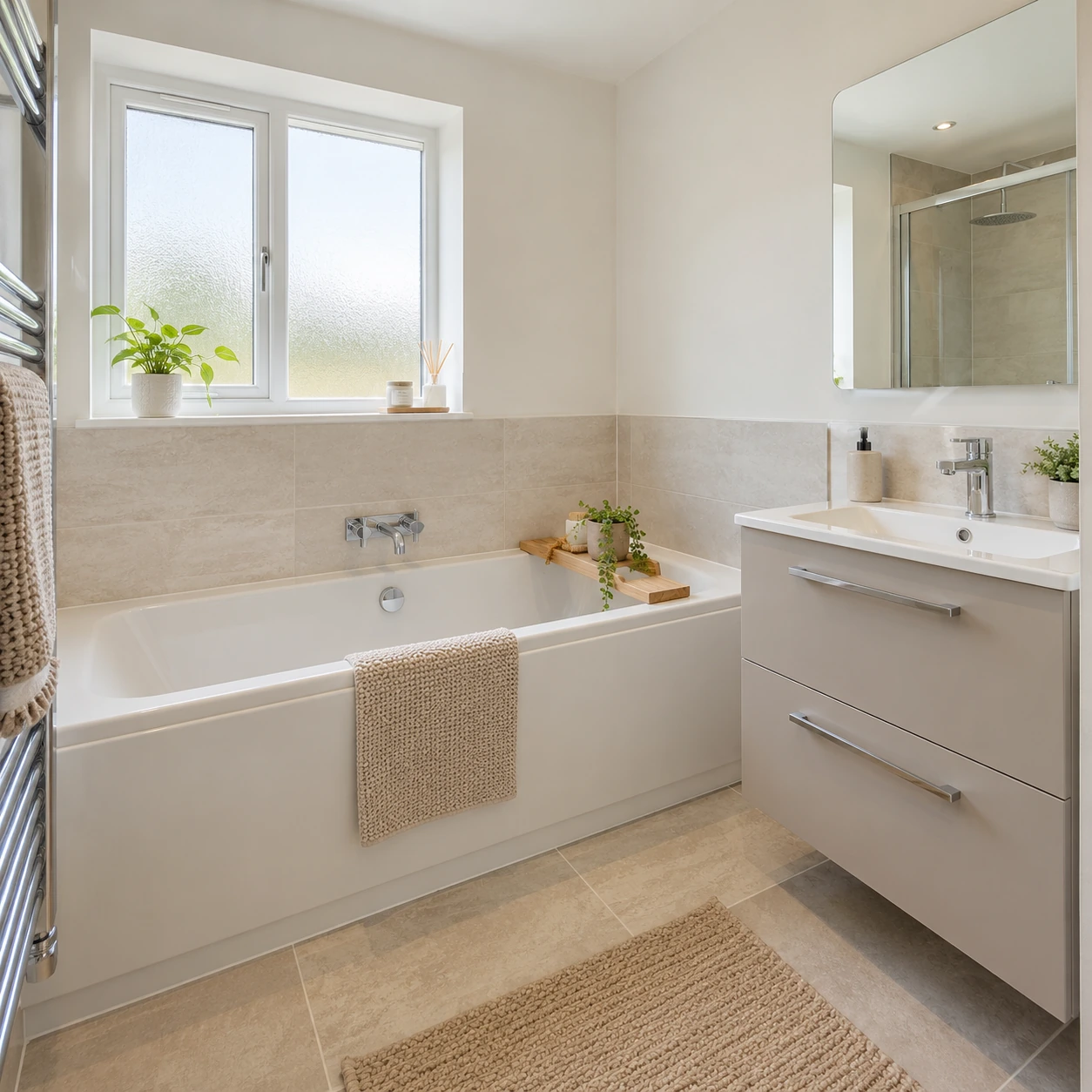
Understand enamelled steel construction
An enamelled steel bath combines a steel body with a hard surface coating. It can offer a firm feel and a simple shape, but the exact weight and fitting requirements depend on the model. The enamel still needs suitable care. A hard surface is not permission to use any abrasive pad or strong cleaner you happen to have.
Impact can damage a finish, and repairs need the right method for that product. If you are keeping an existing steel bath, have chips, rust marks and the area around the waste checked before building a new bathroom around it. A repair may be possible, but do not assume it will disappear completely or restore every aspect of the original warranty.
Check support and the route into the room
The installer must allow for the bath, water and person using it when assessing support. An empty bath’s weight is only part of that load. Existing floor condition, the support arrangement and any structural concerns need checking before installation. Choosing a lighter product does not make a damaged floor suitable without repair.
Measure the delivery route too: entrance doors, stair turns, landings and the bathroom doorway. The package can be larger than the bath itself, and some products cannot be tilted or handled in every way. Agree who is responsible for delivery, moving the bath upstairs and checking it for damage before it is installed. This avoids discovering an access problem on fitting day.
Plan the taps, waste and future access
Not every bath comes with tap holes in the same position, and not every model can be drilled wherever you choose. Follow the manufacturer’s instructions for the tap arrangement. Wall-mounted taps need their own pipework and support, while bath-mounted taps need room below for connections. Check the reach of the spout into the bath before ordering.

The waste and overflow should also be compatible with the model. Future access to connections matters, particularly where a panel will be tiled or fitted tightly against furniture. Ask how a leak or faulty waste could be reached later. A neat finish should not depend on permanently hiding plumbing that may need inspection or maintenance.
Follow the cleaning instructions for the finish
Use the cleaning method specified for the actual bath. Manufacturer guidance for acrylic commonly calls for a soft cloth or sponge and a suitable non-abrasive cleaner. Steel enamel guidance also warns against certain abrasive or aggressive products. Neither material should be treated as immune to damage from unsuitable chemicals or tools.
Rinse away soap and cleaning residue, and avoid leaving products on the surface longer than instructed. If a mark will not come off, seek the manufacturer’s advice before trying a stronger treatment. DIY polishing or repair kits are not suitable for every coating and may affect the finish. Keep the product details so the correct guidance is easy to find.
Compare the complete fitted price
Ask whether the price includes the bath, support kit, panel, waste, taps and screen where needed. Delivery, removal of the old bath and repairs to the surrounding walls or floor may also affect the total. Comparing two empty tubs without those items can give a misleading picture of the final cost.
Our bathroom fitting service can include a bath suited to your layout and chosen package. See bathroom prices and packages and our small bathroom guide for related planning. For care instructions, consult the maker, such as Villeroy & Boch’s bathroom guidance. Call 01236 801802 to discuss the room and the bath you want to keep or replace.
The material is separate from the installation style. Our freestanding and fitted bath comparison covers access, surrounding space and cleaning so you can weigh those practical details alongside the bath itself.